AI is the buzzword of the century. But are we actually using it the right way?
Most teams still approach AI as an individual assistant: one person, one chat window, one set of prompts. Useful? Absolutely. Transformational? Not yet.
The real shift starts when we stop thinking about AI as my assistant and start designing AI as an assistant for a team, a function, or even an entire role.
At that point, you’re no longer talking about a simple copilot. You’re building a web of agents that can be reached through different channels, or eventually work autonomously when trust is strong enough.
Trust First, Autonomy Later
Let’s start with the hardest part: trust.
Many people still treat AI like a magical black box that knows everything and gets everything right. It doesn’t.
AI can do a lot, but it learns from data created by humans. And humans make mistakes. That means AI can reproduce those mistakes until we correct it.
In that sense, AI is not so different from people at work:
- We make errors
- We get feedback
- We improve over time
AI follows a similar pattern. Day 1 won’t be perfect. That’s why human oversight matters. We need humans in the lead: guiding, correcting, and setting boundaries until confidence is high enough for more autonomous execution.
What Changes When Trust Is There
Once trust is in place, possibilities expand fast. Doors open where people previously saw only walls.
Let’s take one persona: an IT operations professional.
A typical IT role often includes responsibilities like:
- 1st-line service desk
- 2nd-line service desk
- On-prem server maintenance
- Cloud infrastructure maintenance
- Device provisioning (laptops, phones, accessories)
- Software configuration and monitoring
- And much more
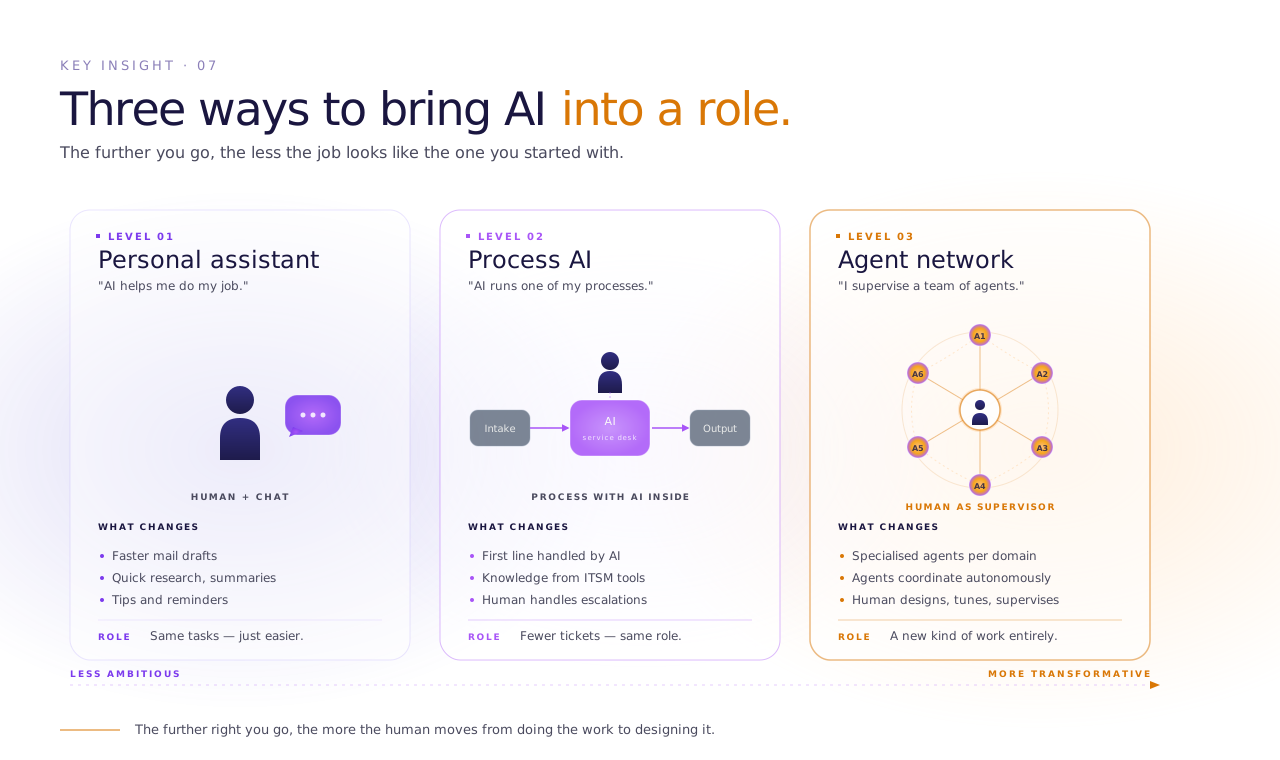
From individual copilots to collaborating agents: this is the shift that unlocks real, scalable impact.
The straightforward move is to add an AI assistant that helps with these tasks: suggest steps, rewrite emails, surface tips. Helpful, but the role itself stays largely the same.
A stronger move is to redesign one process with AI, for example service desk intake. Users interact with AI to capture first-line issues and receive solutions from your existing ITSM knowledge.
Good step. Still not the end state.
From One Assistant to a Web of Agents
Now imagine going further.
Imagine an agent that monitors cloud errors. Imagine an agent that captures first-line incidents and proposes fixes. Imagine a specialist agent that resolves cloud infra issues using PowerShell expertise. Imagine an agent that detects onboarding milestones and automatically triggers orders for laptops, phones, backpacks, and workplace setup.
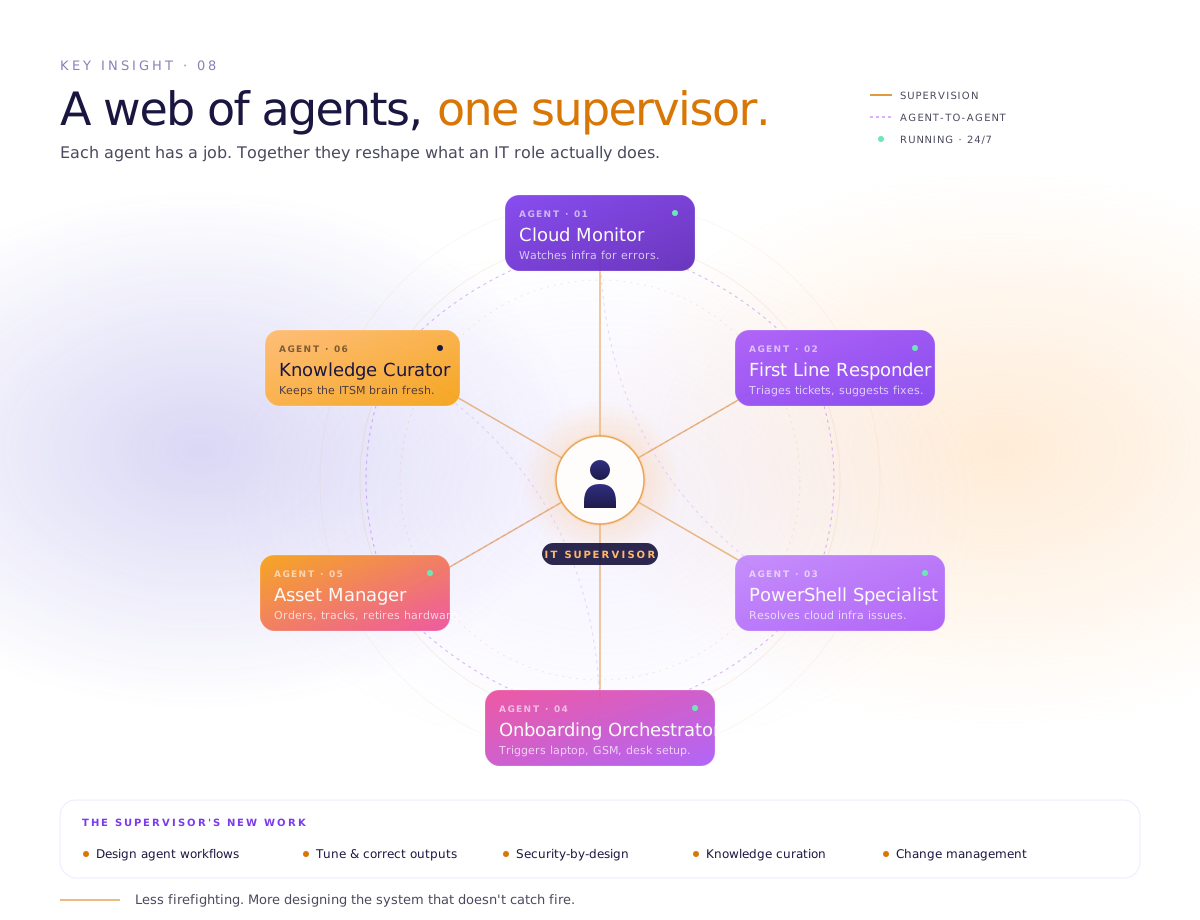
Each request can be handled by a specialist agent, while shared context between agents enables faster and more consistent execution.
Now connect them.
These agents can exchange context with each other and coordinate actions. The IT professional shifts from doing repetitive ticket work to supervising, fine-tuning, governing, and improving an intelligent system.
That is a role redesign, not just a productivity tweak.
Will Jobs Disappear?
Some tasks will disappear, especially repetitive copy-paste work.
But in practice, many roles evolve rather than vanish. The emphasis moves toward:
- Agent workflow design and maintenance
- Quality control
- Security-by-design
- Knowledge management
- Change enablement across the business
In short: less firefighting, more structural improvement.
That also means reskilling becomes essential: data literacy, prompt/agent thinking, automation basics, and process analysis.
The Real Question
The most useful question is not: “How can I chat with AI faster?”
It’s this: “How can we redesign work so humans focus on judgment, and agents handle the repetitive operational load?”
That is where meaningful impact lives.
Why do the boring stuff, when you can focus on the exciting things?