Most conversations about AI failures miss the real problem. We hear warnings that the AI bubble is bursting, that too many projects are underwhelming, that the promised productivity gains never materialise.
But I think we’re asking the wrong question. The issue isn’t whether AI works, it does. The issue is how we’re deploying it.
The Trap: AI as an Add-On
Here’s what I see in most organisations:
- We map out existing processes (usually inefficient ones)
- We identify steps where we could insert AI
- We add AI to those steps and hope productivity magically increases
It’s like trying to fix a broken assembly line by adding robots to every position. If the line was broken to begin with, the robots just amplify the problem at higher speed.
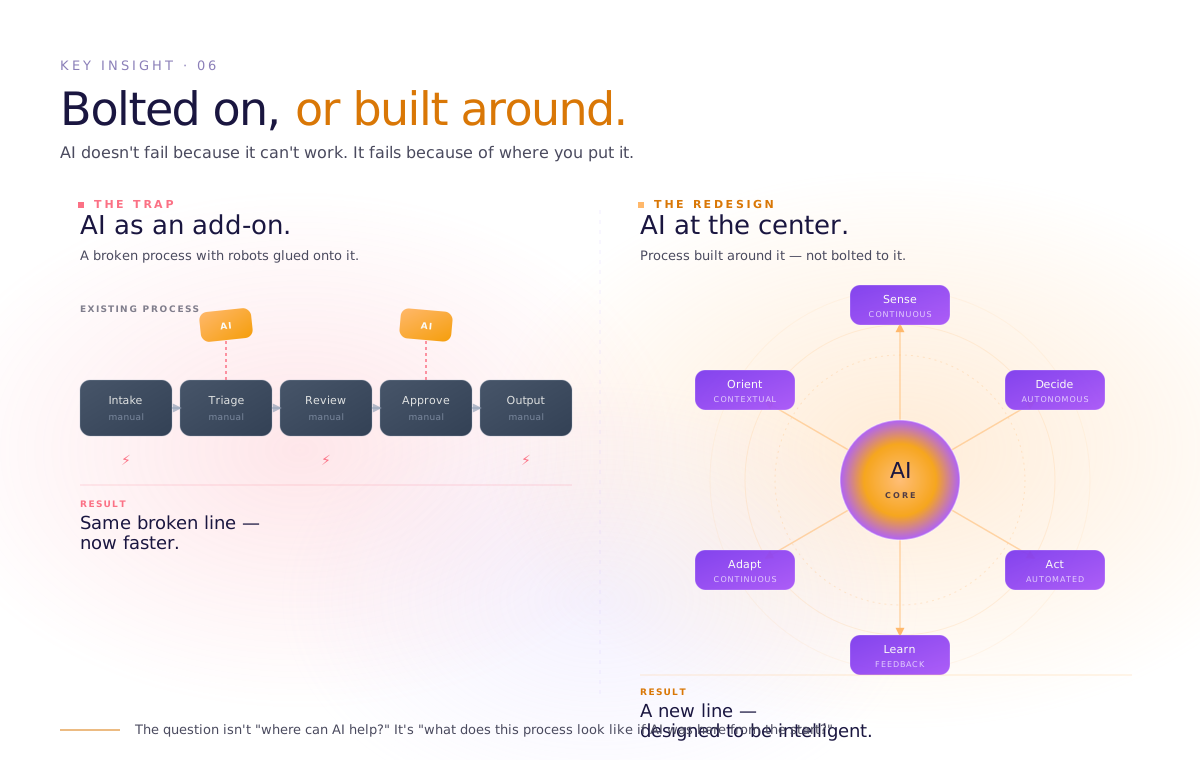
The real opportunity is different. What if we redesigned our processes entirely, with AI at the center, and let it drive efficiency from the ground up?
The Principle: AI-Led Doesn’t Mean AI-Only
This is critical: redesigning around AI doesn’t mean eliminating humans. It means putting humans where they add the most value.
Traditional automation handles repetitive, predictable tasks well. AI excels at handling exception cases, pattern recognition, and adaptive decision-making. The sweet spot is combining both, and maintaining human oversight for anything anomalous.
Let me show you what this looks like in practice.
A Concrete Example: Purchase Order Processing
In most companies, handling purchase orders is tedious manual work:
- Employee receives PDF by email
- Opens it, reads it, checks for issues
- If everything looks good, manually processes it into accounting software
- If there’s a problem, escalates it
Now imagine the same process redesigned around an AI agent:
The agent picks up the incoming purchase order and:
- Validates against known suppliers
- Checks product codes and quantities against your catalogue
- Verifies pricing is within expected ranges
- Automatically processes valid orders into accounting software
If the agent detects an anomaly, an unfamiliar supplier, an unusual quantity, a price spike, it flags the order for human review instead of halting the entire workflow.
The result: 85-90% of orders flow through automatically. Your team only handles genuinely exception cases that require judgment.
That’s process redesign with AI at the centre. Not replacing humans. Amplifying them.
Zooming Out: The Bigger Picture
That purchase order example is just one step in a larger procurement process. Zoom out, and an AI agent could simultaneously:
- Monitor stock levels and suggest reorders
- Evaluate new suppliers based on performance data
- Predict demand based on historical patterns
- Flag compliance issues automatically
- Manage multi-level approval workflows
The potential is enormous. But you don’t do it all at once.
The Execution Model: Start Small, Think Big
This is where most organisations stumble. They get ambitious and try to rebuild their entire process on day one. That’s how you fail.
Instead, follow the “start small, think big” principle:
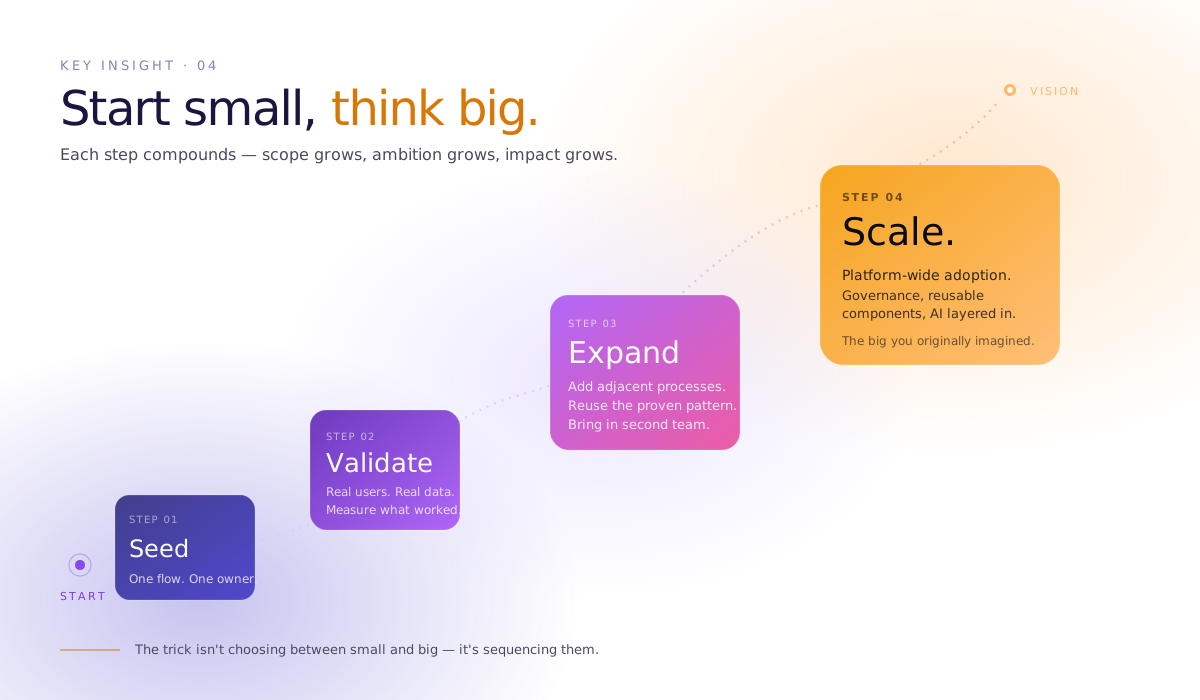
- Identify one painful, repetitive process (like purchase orders)
- Redesign that one process around AI, just that one
- Deploy it modularly so each automation step delivers immediate value
- Measure what works; discard what doesn’t
- Layer on the next process once the first one is stable
Each small automation win builds the foundation for a broader AI-infused landscape. You’re not boiling the ocean, you’re proving the model works, learning from it, and scaling deliberately.
And here’s the key: use traditional automation where it works better. Don’t force AI into every gap. Our job is AI-infused solutions led by humans, not AI for its own sake.
Why This Matters
The companies winning with AI right now aren’t the ones bolting AI onto their existing mess. They’re the ones who asked a harder question: “If we could redesign this from scratch, knowing what we know about AI, what would this look like?”
Then they built that version.
The fear that AI will eliminate jobs is understandable. But what actually happens when you redesign processes around AI is different: humans move from doing repetitive, predictable work to handling judgment calls, exceptions, and the problems that actually require creativity and context.
That’s not a loss. That’s the point.
The question isn’t whether AI works. The question is whether you’re willing to redesign your processes to let it.
Originally published on Cegeka’s blog.