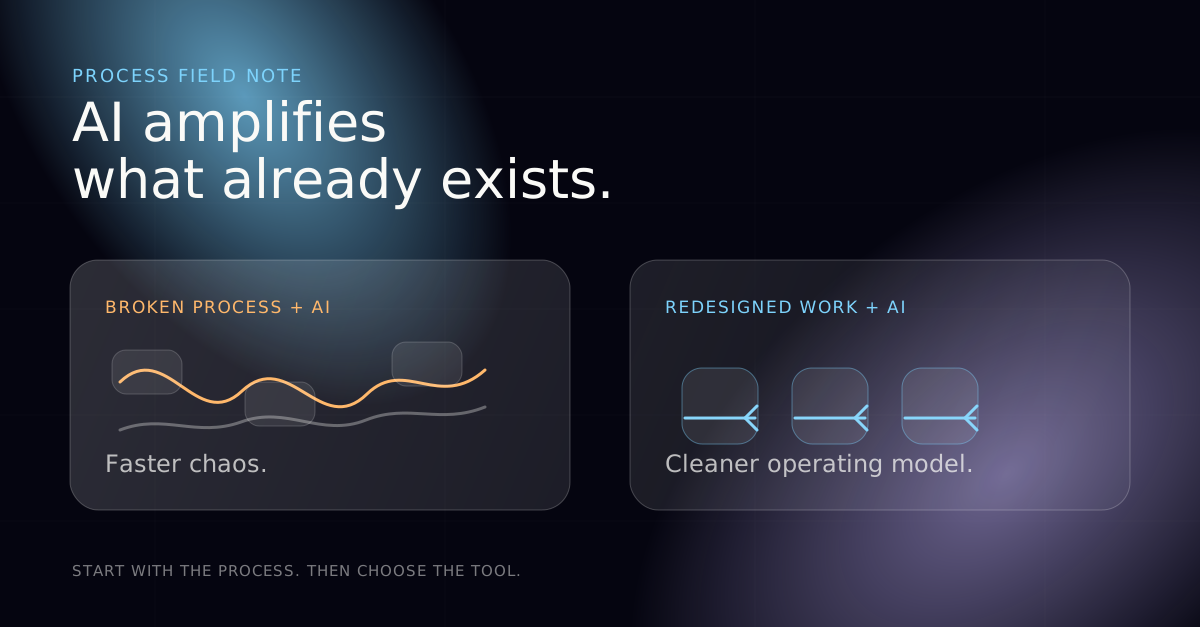
AI will not fix broken processes by itself.
If the process is messy, AI will only help you move the mess faster.
The Trap
Most organisations start their AI journey in the same way. They look at an existing process, identify a few painful steps, add Copilot or an agent on top, and hope the productivity gains appear. Sometimes they do. For a while. A summary is created faster. An email is drafted quicker. A decision gets some extra context. Useful? Absolutely. Transformational? Not really. Because if the process was unclear before AI, it will still be unclear after AI. If nobody owns the process, AI will not magically create ownership. If the data is poor, AI will not turn it into trusted knowledge.
AI Amplifies What Already Exists
This is the uncomfortable part. AI is an amplifier. If your process is well designed, AI can make it faster, smarter and more scalable. If your process is broken, AI can make the broken parts more visible, and sometimes more dangerous. A approval flow with too many exceptions remains a bad approval flow. A SharePoint site with unclear ownership remains unclear. A service desk process without proper categorisation still produces poor reporting. Adding AI on top of that does not solve the root cause. It creates a shiny interface around the same friction.
Start With Work, Not Tools
TThe better question is not: “Where can we add AI?” The better question is: “How should this work happen if we could design it again today?” That small shift changes everything. You stop thinking about AI as a feature and start thinking about AI as part of the operating model. Maybe the answer is an agent. Maybe it is a Power Automate flow. Maybe it is a better form, cleaner data, a clearer owner or fewer approval steps. Good process thinking keeps us honest. It prevents AI from becoming decoration.
The Real Question
AI projects fail when we confuse activity with improvement. A faster bad process is still a bad process. The organisations that will get real value from AI are not the ones adding Copilot buttons everywhere. They are the ones willing to redesign work around outcomes, exceptions, ownership and trust. Do not start with the tool. Start with the process. That is where the value is hiding.
Why do the boring stuff, when you can focus on the exciting things?